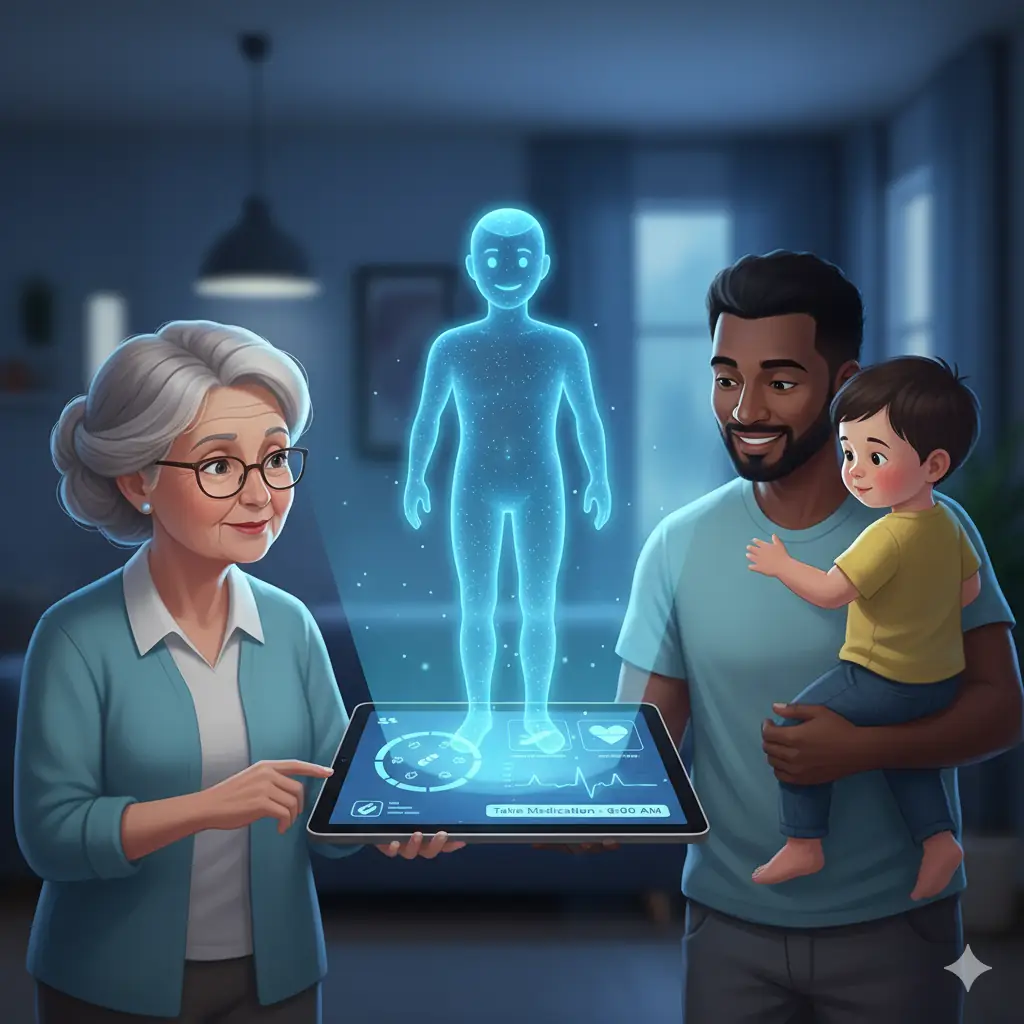


Your AI Companion: How Virtual Health Assistants Enhance Patient Support
Imagine having a dedicated health companion that’s available 24/7, ready to answer your health questions, remind you about your medications, or even help you understand your symptoms. This isn’t science fiction; it’s the reality of AI-powered Virtual Health Assistants.
At insurancesapp.site, we’re exploring how these intelligent digital helpers are transforming patient support. They act as a crucial bridge between patients and healthcare providers, making health information more accessible and managing personal health journeys smoother.
What Exactly Are Virtual Health Assistants?
Virtual Health Assistants (VHAs) are AI-driven software programs, often found as mobile apps or integrated into smart devices, that interact with users to provide health-related information and support. They use Natural Language Processing (NLP) to understand your questions and deliver relevant, personalized responses.
Think of them as highly intelligent chatbots specifically trained on medical knowledge. They can communicate through text, voice, or even visual interfaces, making them versatile and user-friendly for a wide range of individuals.
Their primary goal is to empower patients, offering immediate, reliable information and helping them actively participate in their own care management.
24/7 Access to Health Information and FAQs
One of the most immediate benefits of VHAs is constant availability. Health concerns don’t always arise during clinic hours. With a VHA, patients can get answers to common health questions at any time, day or night.
For instance, if you wake up with a mild rash, you might ask your VHA, “What are common causes of skin rashes?” The VHA can provide basic, doctor-approved information, helping you understand whether it’s something minor or warrants a call to your physician.
This reduces unnecessary anxiety and helps patients determine the appropriate next steps without waiting for an appointment or overloading emergency services with non-urgent inquiries.
Personalized Medication Reminders and Adherence
For patients managing chronic conditions, remembering to take multiple medications at specific times can be a significant challenge. VHAs are excellent at providing personalized medication reminders.
Users can input their medication schedules, and the VHA will send alerts, often with gentle nudges like, “Time to take your blood pressure medication.” Some advanced VHAs can even track if the medication was taken, helping to improve adherence.
Improved medication adherence is vital for treatment success, especially for conditions like diabetes, hypertension, or cardiovascular disease. It translates directly to better health outcomes and fewer hospital readmissions.
Initial Symptom Checking and Triage
Many VHAs include a symptom checker feature. When you describe your symptoms, the AI uses its vast medical knowledge base to suggest potential causes and recommend a course of action.
For example, if you say, “I have a fever, cough, and body aches,” the VHA might suggest you have a common cold or flu, and advise rest and fluids. Crucially, it will also alert you to ‘red flag’ symptoms that require immediate medical attention, guiding you towards appropriate care.
It’s important to remember that these are not diagnostic tools. They offer guidance and initial assessment, but they always recommend consulting a human healthcare professional for a definitive diagnosis.
Support for Chronic Disease Management
Living with a chronic condition like diabetes, asthma, or heart disease requires continuous self-management. VHAs can play a supportive role in this ongoing journey.
They can track vital signs (often integrating with wearable devices), monitor glucose levels, provide dietary advice tailored to specific conditions, and even suggest exercises. This personalized support helps patients stay on track with their treatment plans between doctor visits.
By proactively engaging patients in their own care, VHAs help them maintain a better quality of life and potentially prevent complications, making day-to-day management less overwhelming.
Navigating Healthcare Systems and Appointments
Healthcare systems can be complex and confusing. VHAs can simplify this by assisting patients with administrative tasks.
They can help users find nearby clinics, locate specialists, or even guide them through the process of scheduling appointments. Some VHAs integrate with hospital systems to show real-time wait times or assist with pre-registration paperwork, reducing administrative burdens.
This reduces frustration and ensures patients can more easily access the care they need, improving the overall patient experience.
- Personalized Health Coaching: AI can analyze your health data and provide tailored advice on diet, exercise, and stress management, acting as a digital wellness coach.
- Mental Health Support: Some VHAs offer basic emotional support, mindfulness exercises, or guide users to appropriate mental health resources. They are not therapists but can provide a first line of digital support.
- Post-Discharge Instructions: After a hospital stay, VHAs can remind patients about follow-up appointments, wound care, or medication changes, aiding recovery and preventing readmissions.
The Human Element and Limitations
While VHAs offer incredible advantages, it’s crucial to understand their limitations. They are tools designed to support, not replace, human healthcare providers. They lack empathy, the ability to perform physical examinations, or the capacity for nuanced clinical judgment.
The information they provide is generalized, based on pre-programmed knowledge and algorithms, and may not always account for a patient’s unique medical history or specific circumstances. Always view VHA advice as a starting point, not a definitive medical order.
Furthermore, concerns around data privacy and the accuracy of information remain. Developers must ensure these tools are built with the highest standards of security and continually updated with the latest, evidence-based medical knowledge.
Design Highlight: Conversational AI
The effectiveness of a VHA largely depends on its conversational abilities. Advanced NLP allows these assistants to understand context, follow up on questions, and engage in natural, human-like dialogue, making the interaction intuitive and helpful for patients.
Virtual health assistants represent a significant step forward in making healthcare more accessible, personalized, and proactive. By empowering patients with information and continuous support, they are transforming how individuals manage their health daily.
As these technologies continue to evolve, they promise an even more integrated and supportive future for patient care, making health management simpler and more effective for everyone. Stay informed with insurancesapp.site for more on these exciting developments!