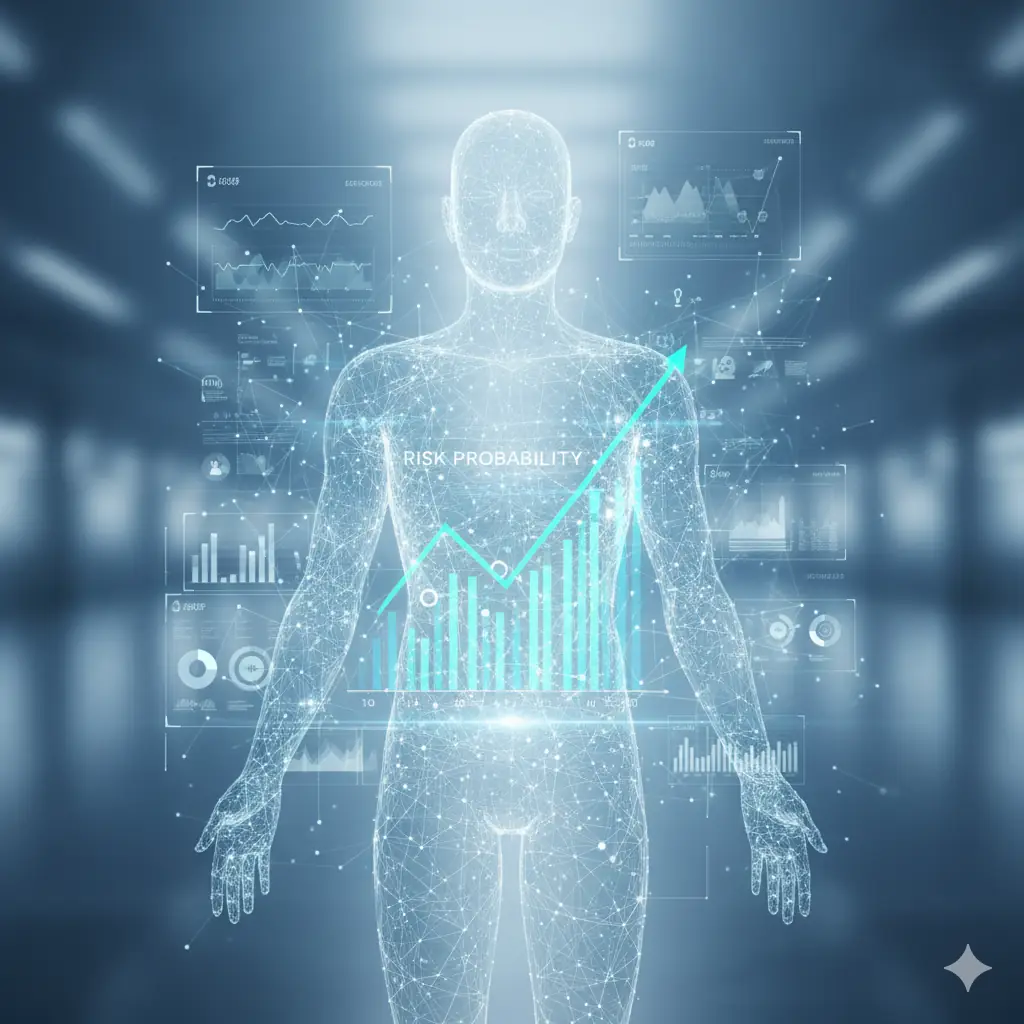


Moving Beyond Reaction: The Power of Health Foresight
For a long time, healthcare has been largely reactive. We wait for symptoms to appear, receive a diagnosis, and then begin treatment. While effective, this approach often misses the critical window for early, less invasive interventions. Imagine being able to see health risks coming long before they manifest.
Predictive analytics is transforming this model entirely. By applying sophisticated statistical techniques and machine learning to vast pools of health data, we can now forecast an individual’s likelihood of developing a condition. This shift to proactive prevention is changing the future of wellness.
What Exactly is Predictive Analytics in Health?
Predictive analytics uses historical and current data to make probabilistic forecasts about future events. In healthcare, this involves algorithms analyzing diverse inputs—genetic markers, electronic health records (EHRs), lifestyle data, and even environmental factors—to assign a numerical risk score for various diseases.
Think of it like a highly intelligent weather forecast for your body. It takes complex, real-time data and projects potential health storms, allowing you and your care team to prepare. This capability moves us from treating illness to managing wellness intelligently.
The Data Sources Powering Prediction
The accuracy of predictive models hinges on the quality and breadth of the data they consume. Modern healthcare provides an ever-growing stream of information, which these algorithms use to build their complex forecasts. Tapping into these diverse sources is crucial for comprehensive risk assessment.
The key data streams include patient demographics, lab results, medical history captured in EHRs, genomic sequencing data, and increasingly, continuous monitoring from wearable devices. Combining these layers provides a holistic and dynamic view of an individual’s health trajectory.
- Electronic Health Records (EHRs): Provides historical context on diagnoses, medications, and clinical visits.
- Genomic Data: Identifies inherited predispositions and genetic markers for various diseases.
- Wearable Devices: Offers real-time data on heart rate, sleep quality, and physical activity.
- Socioeconomic and Environmental Data: Incorporates factors like neighborhood, pollution levels, and access to food and care.
How Machine Learning Models Forecast Risk
The core of predictive analytics relies on machine learning algorithms. These models are trained on massive historical datasets of people who did and did not develop specific diseases, learning the subtle patterns that differentiate the two groups. This training process allows the model to generalize and predict for new patients.
For instance, an algorithm might identify that a combination of three specific lab markers, combined with a particular age range and one genetic variant, leads to a 70% chance of developing Type 2 Diabetes within five years. The model learns these complex relationships far beyond what a clinician could track manually.
Targeting Chronic Disease Prevention
Chronic diseases, such as heart disease, hypertension, and diabetes, are prime targets for predictive analytics due to their strong links to lifestyle and early risk factors. Early identification of high-risk patients allows for highly focused, personalized interventions.
By flagging a patient with an elevated risk score, clinicians can initiate intensive lifestyle coaching, specific screening schedules, or low-dose preventative medication years before the disease is clinically diagnosable. This intervention can halt or significantly delay the onset of the condition, fundamentally improving the patient’s long-term health.
Real-World Example: Sepsis Prediction
In hospital settings, predictive models are used to monitor high-risk patients in real time. An AI system continuously analyzes a patient’s vital signs, blood work, and changes in their EHR. If it detects subtle, simultaneous changes indicative of early-stage sepsis—a life-threatening infection—it alerts the clinical team hours before human staff might recognize the subtle deterioration, enabling rapid treatment and significantly boosting survival rates.
The Ethical and Practical Considerations
While the promise of predictive analytics is vast, its implementation requires careful navigation of ethical and practical concerns. Data privacy is paramount, requiring strict adherence to regulations like HIPAA and GDPR to ensure patient confidentiality is maintained.
Furthermore, we must address the issue of algorithmic bias. If the training data disproportionately represents certain populations, the model may produce inaccurate or biased predictions for underrepresented groups, potentially exacerbating health inequities. Ensuring equitable access and fair predictions is a continuous ethical responsibility.
| Predictive Analytics: Pros | Predictive Analytics: Cons/Challenges |
|---|---|
| Enables proactive, early intervention. | Requires massive, high-quality, diverse data sets. |
| Personalizes risk assessment and treatment. | Potential for algorithmic bias and health inequity. |
| Optimizes resource allocation in healthcare systems. | Concerns regarding patient privacy and data security. |
Focus on Actionable Risk
A prediction is only useful if it leads to action. The best predictive systems not only give a risk score but also suggest specific, evidence-based steps—like recommending a particular screening test or lifestyle modification—that the patient and doctor can take immediately to mitigate that risk.
A Healthier Tomorrow Through Insight
Predictive analytics represents a fundamental shift from treating illness to maintaining wellness. It offers a powerful tool for early detection, personalized prevention, and resource optimization. By transforming vast amounts of data into actionable insights, we move closer to a healthcare system focused on keeping people healthy.
This technology doesn’t replace the doctor’s judgment; it enhances it, giving clinicians the foresight they need to partner with patients effectively. As these models become more sophisticated, the promise of preventing disease before it takes hold will become a routine reality.