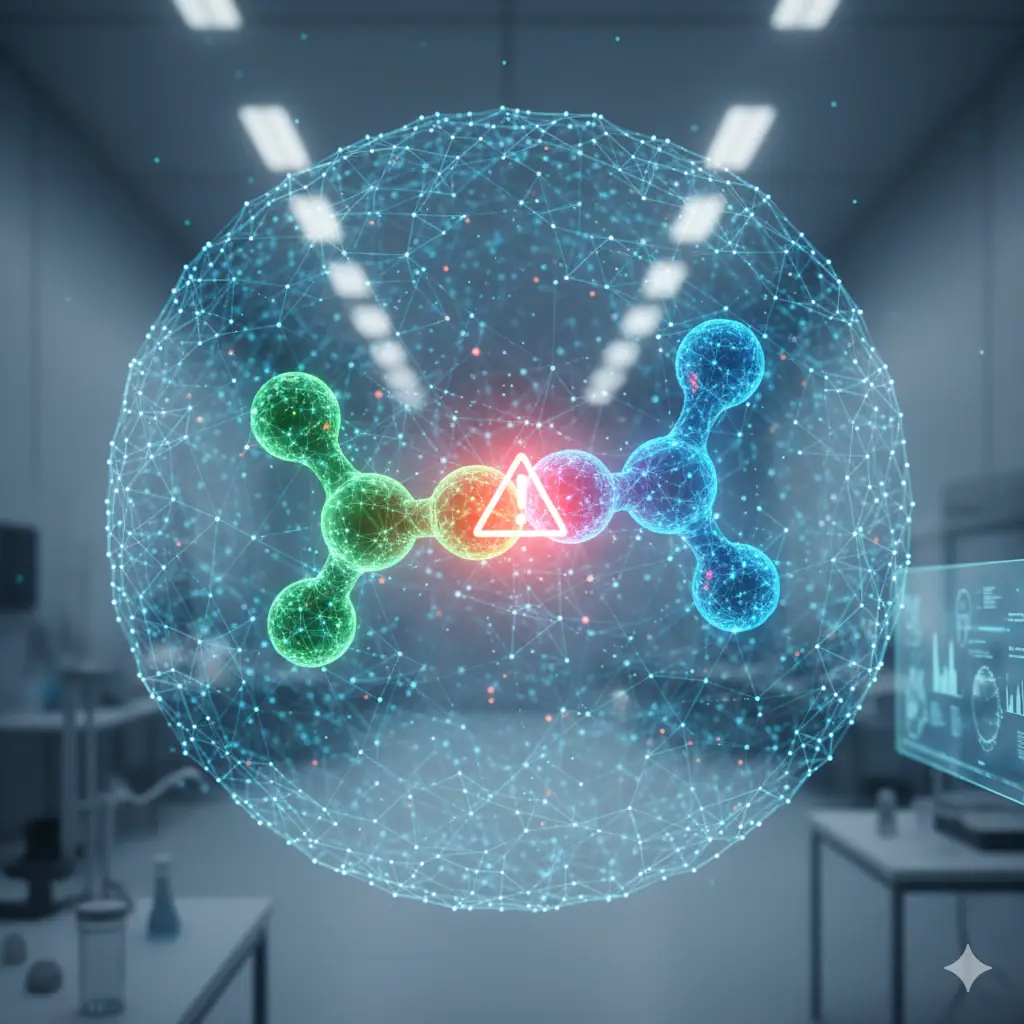


Safety First: Machine Learning in Predicting Dangerous Drug Interactions
For patients managing multiple health conditions, medication safety is a constant concern. When two or more drugs are taken together, they don’t always behave as expected; sometimes, they can interact in ways that reduce effectiveness or, worse, cause serious side effects.
Predicting these Drug-Drug Interactions (DDIs) is a huge challenge for healthcare providers, especially given the thousands of drugs available. This is precisely where Machine Learning (ML) steps in, offering a powerful, proactive solution.
Here at insurancesapp.site, we’re exploring how ML is transforming pharmacology from a trial-and-error process into a highly accurate predictive science, making medication management safer for everyone.
The Challenge of Drug Interaction Complexity
The human body is an incredibly complex system. When you introduce multiple chemical compounds (drugs), the number of potential interactions—both beneficial and harmful—grows exponentially.
Traditional methods for finding DDIs rely on laboratory testing, clinical trials, and post-market surveillance. These methods are slow, resource-intensive, and often only uncover interactions after adverse events have already occurred in patients.
ML provides a necessary upgrade. It can analyze millions of data points simultaneously, including chemical structures, biological pathways, and patient health records, to forecast these complex relationships before they happen.
How Machine Learning Models Make Predictions
ML algorithms treat the prediction of a DDI as a classification or relationship prediction problem. They are trained on comprehensive datasets that describe known drugs and their documented interactions.
Feature Engineering for Drugs
To start, the ML model needs to ‘understand’ the drugs. This involves feature engineering, which means translating the drug’s properties into numerical data the algorithm can use. Features might include the drug’s chemical structure, its molecular weight, its target protein in the body, and its known side effects.
By representing each drug as a high-dimensional vector of features, the algorithm can calculate the ‘similarity’ between drug pairs and link those similarities to historical interaction patterns.
Graph Neural Networks (GNNs)
A sophisticated technique involves using Graph Neural Networks (GNNs). These models view drugs and biological entities (like proteins or enzymes) as ‘nodes’ in a network, with the relationships between them as ‘edges’.
The GNN analyzes the shape and connectivity of this network to predict potential new harmful connections. For example, if Drug A interacts with Protein X, and Drug B also interacts with Protein X, the GNN can predict a high likelihood of a DDI between Drug A and Drug B.
Data Sources Fueling ML Predictors
The accuracy of DDI prediction models is entirely dependent on the quality and volume of the input data. Researchers pull information from diverse, rich sources:
- Electronic Health Records (EHRs): Anonymized patient data provides real-world evidence of adverse events when patients are taking specific drug combinations.
- Pharmacological Databases: Extensive databases cataloging known chemical structures, targets, and metabolic pathways for thousands of compounds.
- Scientific Literature: NLP models scan millions of published papers and patents to extract subtle textual clues about potential interactions.
By integrating and cross-referencing these vast data streams, ML creates a comprehensive picture of drug behavior that no single human expert could ever process.
| 🤖 Key Advantages (Pros) | ❌ Current Limitations (Cons) |
|---|---|
| Proactive Safety: Predicts novel DDIs before they are observed clinically. | Data Sparsity: Lack of interaction data for new or rarely prescribed drug combinations. |
| Speed and Scale: Analyzes millions of drug pairs instantly, impossible manually. | False Positives: Models may flag non-harmful interactions, leading to unnecessary clinical caution. |
| Mechanism Identification: Can suggest the biological mechanism underlying the interaction. | Generalization: Models trained on one type of data (e.g., protein data) may not translate perfectly to patient outcomes. |
Impact on Clinical Practice and Patient Safety
The application of these ML tools is already making a difference in clinical settings. The most direct benefit is improved patient safety during prescribing.
When a physician enters a new prescription into a patient’s EHR, the integrated ML system can instantly cross-check the proposed medication against the patient’s existing regimen. If a high-risk DDI is predicted, the system generates an immediate, high-priority alert for the doctor.
Micro-Case Example: An ML model flags a potential interaction between a common antibiotic and a patient’s existing heart rhythm medication. The interaction, which could prolong the QT interval and lead to a dangerous arrhythmia, might not be immediately obvious, but the AI prevents the potentially fatal combination.
Furthermore, in the pharmaceutical industry, ML helps prioritize compounds that are less likely to cause interactions early in the drug development process, leading to safer drugs reaching the market faster.
Notes on Interpretation and Validation
While ML predictions are powerful, they are not infallible. Clinical validation remains essential. A prediction of a DDI is a signal that requires human interpretation by a pharmacist or physician.
The AI not only needs to predict *that* an interaction will occur but also *how* it will occur (the mechanism) and *how severe* it might be. This ensures the clinician can take appropriate steps—adjusting the dose, switching the drug, or increasing monitoring—rather than simply stopping treatment.
As these tools become more integrated into clinical practice, they promise a profound improvement in medication safety. They empower clinicians with proactive information, turning every prescription into a carefully considered and safer choice for the patient.
The future of pharmacology is precise and predictive, all thanks to the intelligent analysis provided by Machine Learning. Stay current on these vital developments with insurancesapp.site.