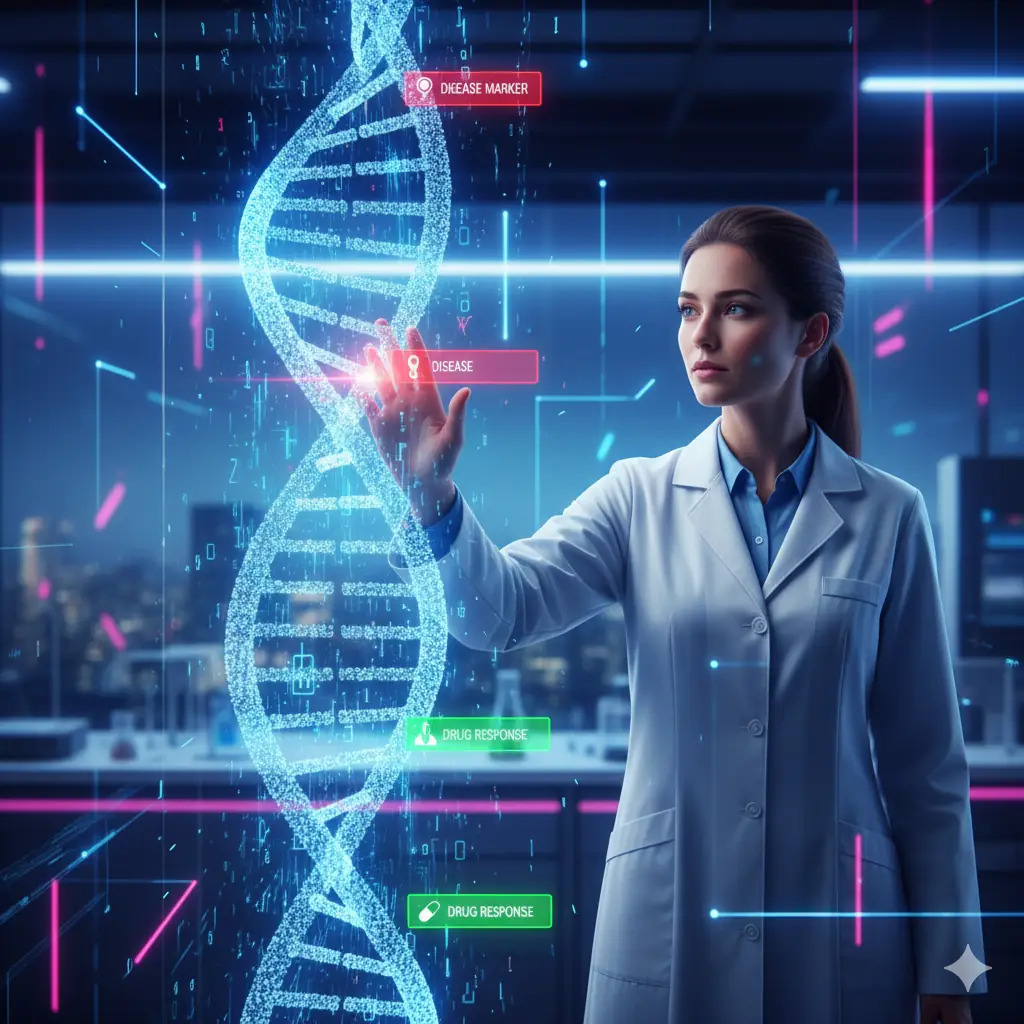


Genomics: The Ultimate Big Data Challenge
The human genome, the complete set of our DNA, is an incredible blueprint for life. However, reading and truly understanding this blueprint—which consists of billions of base pairs—is one of the biggest data challenges in modern science. Just one full human genome sequence generates massive files, and when you multiply that by millions of patients, the sheer volume is staggering.
Traditional data analysis methods are often too slow and limited to extract meaningful insights from this genomic ocean. Simply put, human analysts can’t process information at the speed and scale required. This is where Artificial Intelligence steps in, transforming a monumental task into a manageable scientific endeavor.
AI as the Genomic Interpreter
Artificial Intelligence, particularly machine learning, acts as a highly specialized interpreter for genomic data. It doesn’t just store the sequence; it analyzes, compares, and cross-references it against vast databases of known biological functions, diseases, and drug responses. This process extracts meaningful patterns that were previously hidden.
By automating complex pattern recognition, AI enables researchers and clinicians to move faster from raw data to actionable knowledge. It’s like having a dedicated supercomputer dedicated to finding the most critical sections of a massive, complex technical manual.
Accelerating Variant Identification and Annotation
The first crucial step in genomic analysis is identifying genetic variants—small differences in the DNA sequence that distinguish one person from another. While most variants are harmless, some can cause disease. Finding the specific, disease-causing variant among millions is often described as the ‘needle in a haystack’ problem.
AI algorithms dramatically speed up this process by filtering out common, benign variants and highlighting rare ones that are statistically linked to a patient’s symptoms. The AI then ‘annotates’ these variants, adding details about their potential function and association with specific conditions. This acceleration is critical for rapid diagnosis, especially in rare diseases.
Linking Genetics to Disease Risk
Understanding an individual’s lifetime risk for common and complex diseases requires analyzing not just one, but many genetic variations working in concert. AI models, specifically those using polygenic risk scoring, are masters at weighing the cumulative effect of these many small genetic factors.
For example, an AI can analyze thousands of single nucleotide polymorphisms (SNPs) across a person’s genome and combine this with environmental factors to generate a personalized risk score for conditions like Type 2 diabetes or heart disease. This level of predictive insight allows for proactive, customized prevention strategies.
Insight: The Data Volume Leap
The computational requirement for genomics is immense. While sequencing a single human genome used to take weeks, AI-driven pipelines can now process the raw data and identify clinically relevant variants in a matter of hours, driving down the time-to-diagnosis dramatically.
AI in Pharmacogenomics: Personalized Drug Response
One of the most immediate impacts of AI in genomics is in pharmacogenomics, which studies how genes affect a person’s response to drugs. Genetics often determines whether a drug will be effective or cause a serious adverse reaction, but analyzing these links manually is cumbersome.
AI algorithms analyze an individual’s genetic variations for key enzymes and transporters that metabolize drugs. Based on these findings, the AI recommends the optimal drug and precise dosage, minimizing harmful side effects and maximizing therapeutic efficacy. It ensures that the right person gets the right medicine at the right dose.
Example: For a patient requiring a new antidepressant, an AI system analyzes their CYP450 genes and determines that they are a ‘slow metabolizer’ of standard doses. The AI suggests a significantly reduced starting dose to prevent drug toxicity, customizing treatment before the first pill is taken.
The Power of Deep Learning for Unstructured Data
Deep Learning, a powerful subset of AI, is especially valuable in genomics for handling complex, unstructured data, such as sequencing reads or patterns in gene expression. These models can identify subtle, non-linear relationships that traditional statistical methods might entirely miss.
They are used to predict the function of newly discovered genes or to analyze complex gene regulatory networks, offering a holistic view of the biological system. This capability is accelerating fundamental biological discovery, going beyond clinical application and into core research.
The Future: Data Integration and Multi-Omics
The ultimate goal in genomic data analysis is not just to look at DNA, but to integrate it with other ‘omics’ data—like proteomics (proteins) and metabolomics (metabolites). AI is the essential tool for managing this multi-omics integration.
By correlating genetic data with a patient’s protein levels and metabolic markers, AI can build a far more complete and dynamic picture of their health status. This holistic approach, powered by AI, moves us closer to predicting health events and implementing truly preventative, hyper-personalized care. The genome is just the start.
Advancing Research and Discovering New Targets
Beyond the clinic, AI is accelerating basic scientific discovery by rapidly analyzing population-scale genomic data. It can identify shared genetic signatures among thousands of patients with a common disease, quickly pinpointing potential drug targets for pharmaceutical development.
This speeds up the time from genetic discovery to therapeutic development, offering hope for diseases that currently lack effective treatments. The seamless integration of AI into genomic research is not just improving patient care today, but fundamentally altering the pace of tomorrow’s medical breakthroughs.