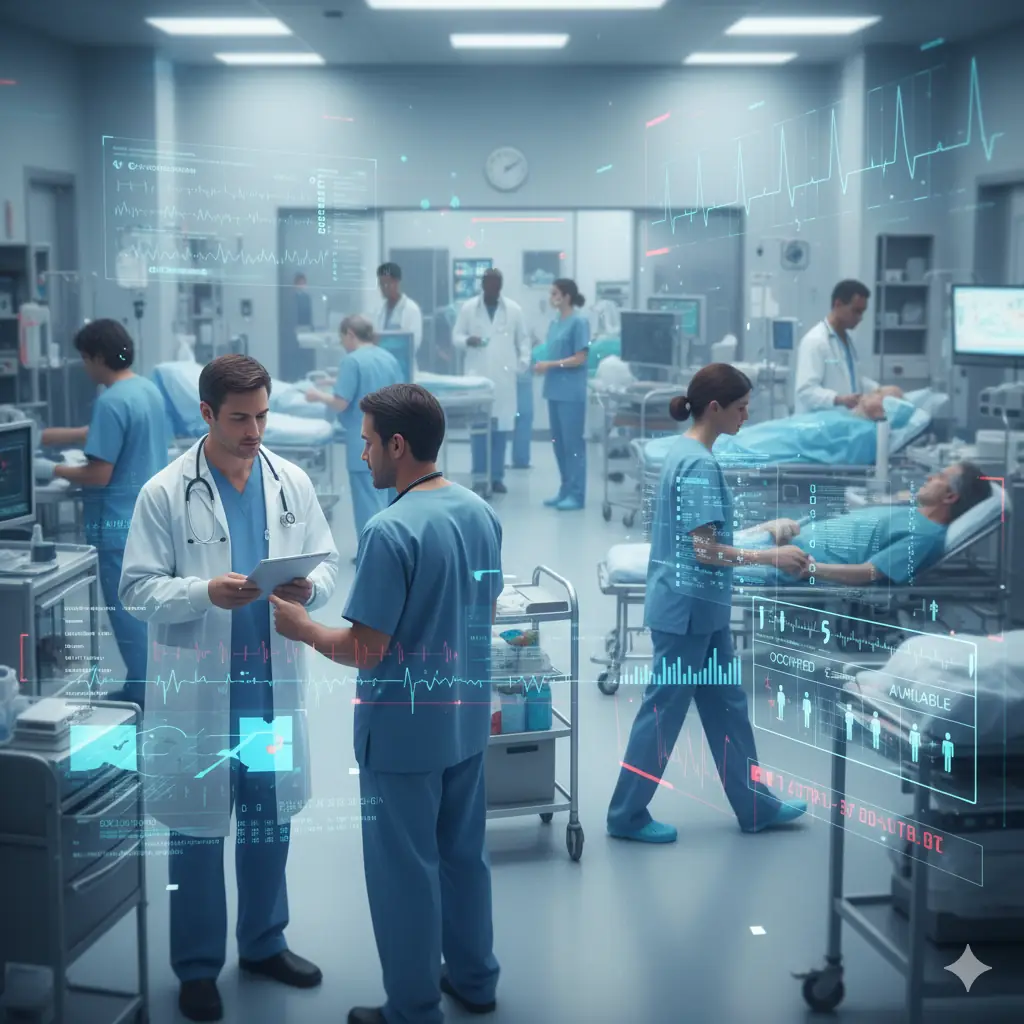


The High-Stakes Environment of the Emergency Room
The emergency room (ER) is a place where every second truly counts. It’s a bustling hub of activity, often dealing with unpredictable patient flows, critical decisions, and the need for rapid responses. This dynamic environment, while heroic, can sometimes lead to long wait times and overwhelmed staff.
Managing resources, prioritizing urgent cases, and ensuring smooth patient transitions are constant challenges. Imagine a complex puzzle where the pieces are always changing; that’s the ER. Thankfully, artificial intelligence (AI) is stepping in to help solve many of these intricate challenges, bringing a new level of order and precision.
AI as a Catalyst for ER Optimization
Artificial intelligence isn’t just a futuristic concept; it’s becoming an indispensable tool in modern emergency departments. By leveraging AI, hospitals can significantly enhance operational efficiency, reduce bottlenecks, and ultimately improve the quality of care delivered. Think of AI as a highly intelligent co-pilot, guiding the ER team through complex situations.
This integration helps optimize everything from patient intake to discharge, ensuring that resources are allocated effectively and critical cases receive immediate attention. It’s about making the ER smarter, faster, and more responsive to the needs of every patient who walks through its doors.
Predictive Analytics for Patient Flow
One of AI’s most powerful applications in the ER is predictive analytics. AI algorithms can analyze historical data, such as day of the week, time of day, seasonal trends, and even local events, to forecast patient influx. This foresight allows hospitals to staff appropriately and prepare resources in advance.
For example, if AI predicts a surge in flu cases during winter months, the ER can proactively ensure enough beds, doctors, and nurses are available. This proactive approach helps reduce overcrowding and minimizes wait times, making the patient experience much smoother and less stressful.
Triage and Prioritization with Enhanced Accuracy
Triage is the critical first step in the ER, determining the urgency of a patient’s condition. Traditionally, this relies on human assessment, which can be challenging under pressure. AI can augment this process by quickly analyzing patient symptoms, vital signs, and medical history to suggest a prioritization level.
AI-powered systems can flag subtle indicators of severe conditions that might be missed during a rapid human assessment. This ensures that the most critical patients receive immediate attention, potentially saving lives. It’s like having an extra pair of highly trained eyes, constantly evaluating and re-evaluating patient needs.
Optimizing Resource Allocation
Efficient management of beds, operating rooms, diagnostic equipment, and staff is paramount in a busy ER. AI can continuously monitor these resources and recommend optimal allocation strategies in real-time. This helps prevent situations where equipment sits idle while another area is in desperate need.
Imagine an AI system that knows exactly which MRI machine is free and can direct a patient there without delay, or suggests redistributing nurses to areas with the highest patient load. This dynamic resource management keeps the ER running like a well-oiled machine, ensuring no valuable time or resource is wasted.
Enhancing Diagnostic Speed and Accuracy
For many conditions, early and accurate diagnosis is key to effective treatment. AI can assist doctors by quickly analyzing medical images, such as X-rays, CT scans, and MRIs, to detect anomalies that might indicate serious conditions. This can significantly speed up the diagnostic process.
For example, AI algorithms can identify subtle signs of a stroke or internal bleeding faster than the human eye, alerting clinicians to critical findings. This accelerated diagnosis means patients can begin receiving life-saving treatment sooner, making a tangible difference in outcomes.
An AI system might analyze an ECG in seconds, identifying a specific heart arrhythmia that could lead to a cardiac event, prompting immediate intervention.
Real-World Impact: More Than Just Numbers
The benefits of AI in the ER extend beyond mere statistics. They translate into tangible improvements in patient care and staff well-wellbeing. When an ER operates more efficiently, patients spend less time waiting, experience less stress, and receive care more promptly. This means better outcomes and a more positive healthcare experience.
Moreover, AI reduces the burden on healthcare professionals, allowing them to focus more on direct patient care rather than administrative tasks or resource juggling. It creates a less chaotic environment, which can lead to reduced burnout and higher job satisfaction for the dedicated ER staff.
The Future is Now: A Smarter, More Responsive ER
The integration of AI into emergency rooms is not just a trend; it’s a fundamental shift in how healthcare is delivered. As these technologies continue to advance, we can expect even more sophisticated tools that will further refine ER operations. Imagine personalized patient pathways, or AI assistants guiding paramedics from the scene to the most appropriate hospital.
Ultimately, AI is helping us build a more resilient, responsive, and patient-centered emergency care system. It ensures that when you or a loved one needs urgent help, the ER is prepared to offer the fastest, most effective care possible. This collaborative future, where human expertise meets artificial intelligence, promises a brighter outlook for emergency medicine.