

Healthcare Beyond the Clinic Walls
For decades, healthcare primarily revolved around in-person visits to doctors’ offices or hospitals. While essential, this model has limitations, especially for managing chronic conditions or providing continuous care. What if we could keep a watchful eye on our health, and our loved ones’ health, from anywhere?
This is the promise of Remote Patient Monitoring (RPM), a technology that allows healthcare providers to collect health data from patients outside traditional clinical settings. But to truly make sense of the constant stream of information RPM generates, we need something more. That’s where Artificial Intelligence steps in, transforming raw data into actionable insights.
AI: The Smart Sentinel of Your Health Data
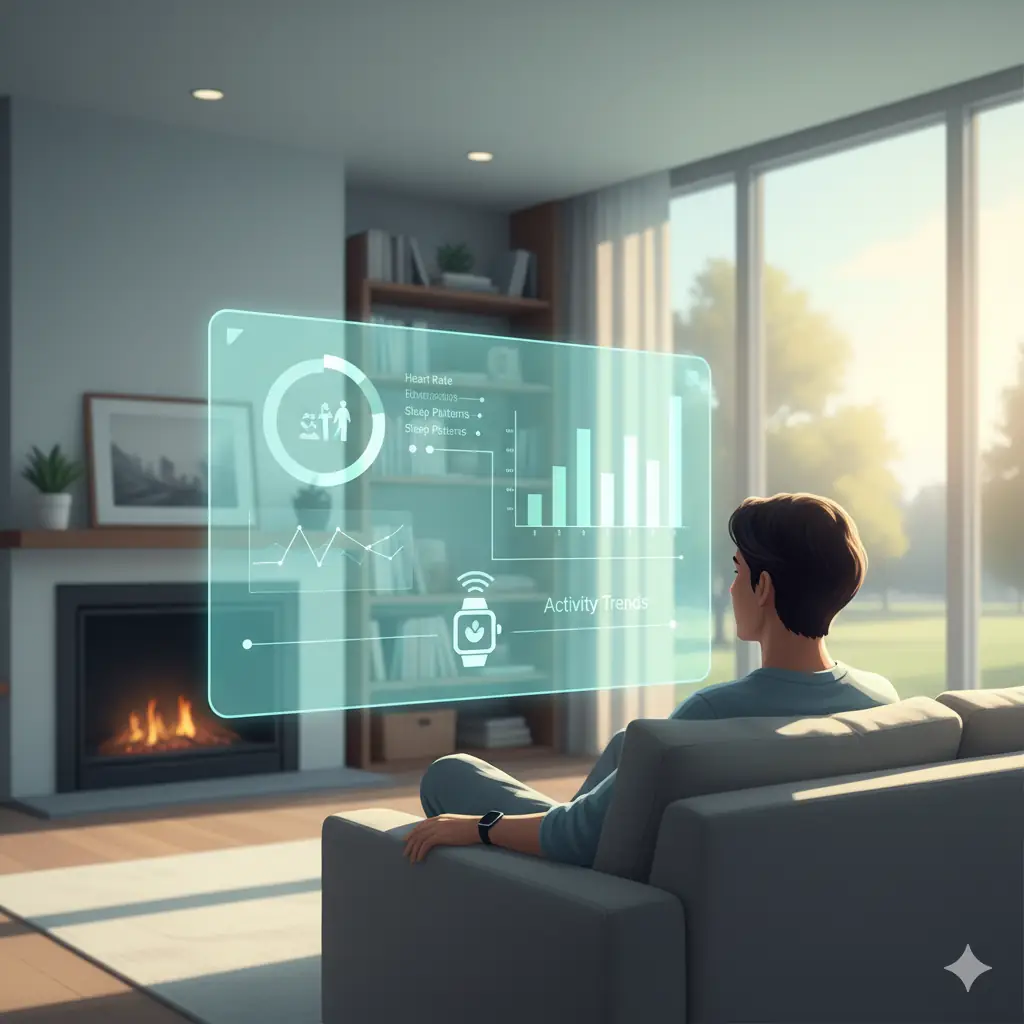
Imagine a digital guardian constantly monitoring your vital signs, activity levels, and other health metrics. That’s essentially the role of AI in Remote Patient Monitoring. Wearable devices like smartwatches, continuous glucose monitors, and smart scales collect vast amounts of data every second.
However, simply collecting data isn’t enough. AI algorithms analyze this massive inflow of information, identifying subtle trends, detecting anomalies, and providing intelligent alerts. It turns a deluge of numbers into meaningful insights, making RPM truly effective and personalized.
Continuous Data Analysis and Anomaly Detection
One of AI’s primary contributions to RPM is its ability to perform continuous, real-time data analysis. Instead of just showing you a snapshot of your health during a clinic visit, AI constantly processes data from your devices, looking for patterns that might indicate a change in your condition.
For example, if an AI monitoring system notices a gradual but consistent increase in a patient’s resting heart rate over several days, combined with decreased activity, it can flag this as a potential early indicator of a developing infection or cardiac issue. This proactive alert allows for early intervention, often preventing a more serious health event.
Personalized Risk Assessment and Early Warning Systems
Every individual’s health baseline is unique. What might be a normal heart rate variation for one person could be a sign of trouble for another. AI excels at learning these individual baselines and then identifying deviations that matter specifically to you. This leads to truly personalized risk assessments.
By comparing your current data against your historical patterns and a vast database of clinical outcomes, AI can generate highly accurate early warnings. This is particularly vital for managing chronic conditions like diabetes or heart failure, where subtle changes can precede acute exacerbations. It’s like having a personal health radar always active.
- Data Collection: Wearable sensors gather continuous vital signs, activity, and sleep data.
- AI Analysis: Algorithms process and identify trends, deviations, and patterns in the collected data.
- Personalized Baseline: AI learns an individual’s unique health norms to differentiate between normal fluctuations and genuine concerns.
- Alert Generation: When a significant anomaly or concerning trend is detected, AI triggers an alert for the patient and/or their care team.
- Clinical Action: Healthcare providers can review the AI’s insights and intervene proactively, often remotely.
Empowering Patients with Proactive Care
AI-powered RPM empowers patients by giving them a more active role in their own health management. They receive personalized feedback and insights, which can motivate them to adhere to treatment plans and make healthier lifestyle choices. This continuous feedback loop reinforces positive behaviors.
For individuals with chronic diseases, RPM can reduce the need for frequent in-person clinic visits, saving time and travel costs, while still ensuring they are closely monitored. It offers peace of mind, knowing that a smart system is constantly watching over their well-being.
Insight: Reducing Hospital Readmissions
AI in RPM has a significant impact on reducing hospital readmission rates for chronic conditions. By continuously monitoring patients after discharge and providing early warnings, AI helps prevent complications that would otherwise send patients back to the hospital, saving lives and resources.
Optimizing Care for Chronic Conditions
Managing conditions like hypertension, congestive heart failure, or COPD requires constant vigilance. AI in RPM makes this vigilance scalable and personalized. It can track blood pressure, oxygen saturation, and activity levels, identifying when a patient’s condition might be worsening.
For example, an AI could notice a pattern of fluid retention in a heart failure patient by correlating daily weight measurements with specific activity levels. It would then alert the care team, allowing them to adjust medication or intervene before a critical event occurs. This leads to more stable health and fewer emergency situations.
The Future of Connected Health
As wearable technology becomes more advanced and AI algorithms grow even more sophisticated, the capabilities of remote patient monitoring will continue to expand. We can expect even more precise tracking, integration with smart home devices, and seamless data sharing that further blurs the line between personal wellness and clinical care.
AI in RPM is not just about technology; it’s about fundamentally reshaping how we manage health. It’s about bringing healthcare into the comfort of your home, making it more proactive, personalized, and continuously responsive to your unique needs. This is the future of truly connected health, improving lives one data point at a time.