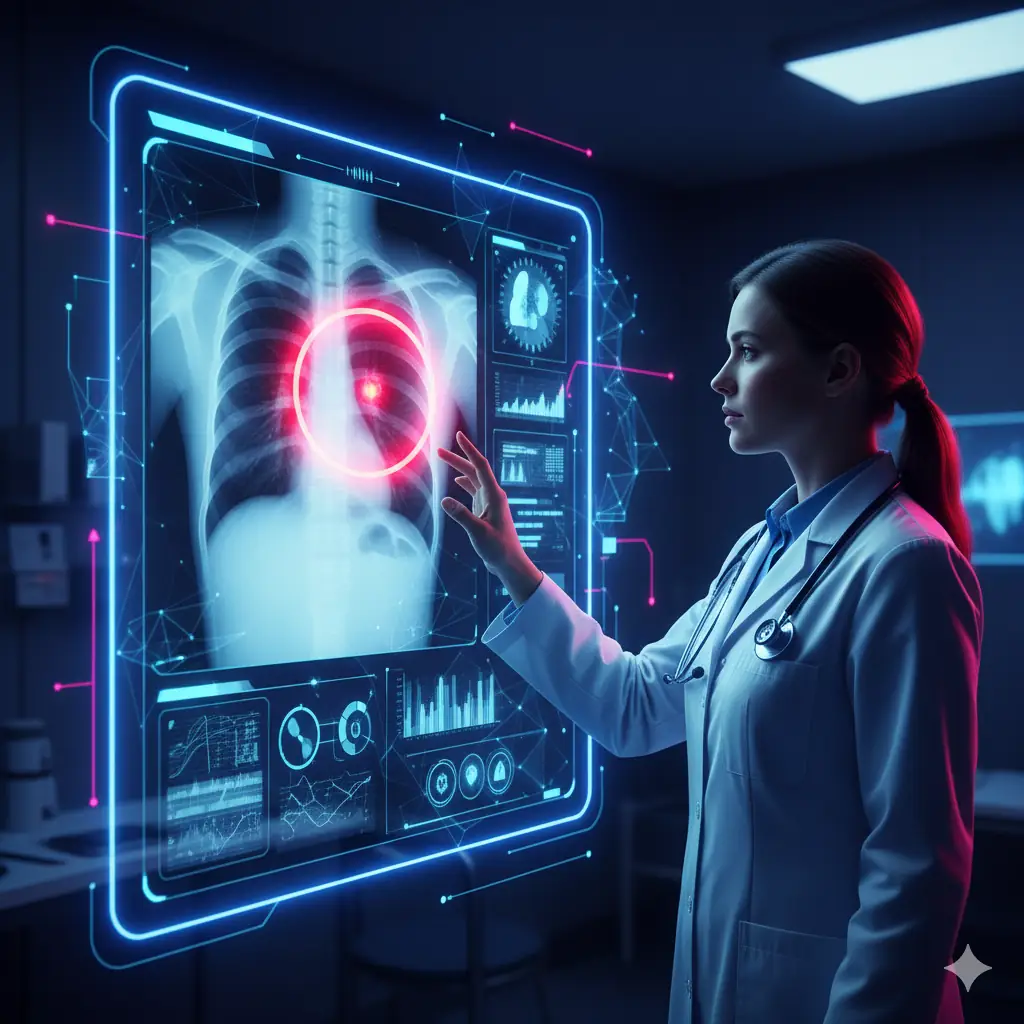


The Challenge of Human Fallibility in Diagnosis
Healthcare professionals are highly trained, dedicated individuals, yet diagnostic errors remain a serious challenge globally. These mistakes can stem from a variety of factors: the sheer volume of medical knowledge, cognitive biases, fatigue during long shifts, or the complexity of non-specific symptoms.
When a diagnosis is delayed, missed, or incorrect, the consequences for the patient can be severe, impacting treatment success and safety. Addressing this human fallibility isn’t about blaming clinicians; it’s about providing them with better tools, and that’s precisely where Artificial Intelligence offers a powerful solution.
AI as the Ultimate Second Opinion
Artificial Intelligence, particularly machine learning, acts as a highly effective safety net and second reviewer in the diagnostic process. Unlike humans, AI algorithms don’t experience fatigue, nor are they limited by the memory capacity of one person. They can rapidly cross-reference a patient’s data against millions of similar cases.
By leveraging this massive dataset and analytical speed, AI helps flag potential misdiagnoses and highlights overlooked possibilities. This collaboration between human experience and machine precision is leading to significantly more accurate and reliable patient outcomes.
Enhancing Image Interpretation Accuracy
One of the most immediate and profound impacts of AI is in medical imaging, such as X-rays, CT scans, and MRIs. These images contain subtle visual information that can be easily missed, especially when a radiologist is reviewing hundreds of images per day.
Deep Learning algorithms are trained on enormous libraries of annotated images to recognize even the most minute visual clues associated with diseases like cancer or internal hemorrhage. The AI can highlight areas of concern on a scan, ensuring the human reviewer focuses on critical spots and dramatically improving the detection rate of subtle findings.
For example, an AI system may identify a tiny, early-stage lung nodule in a CT scan that a human eye might overlook due to its size or location, facilitating prompt follow-up and treatment.
Overcoming Cognitive Biases
Human decision-making is naturally influenced by cognitive biases. For instance, anchoring bias occurs when a doctor focuses too heavily on the first piece of information received, failing to adjust the diagnosis based on new data. Similarly, availability bias leads doctors to favor diagnoses they have encountered frequently.
AI provides an objective, data-driven assessment, free from these human cognitive shortcuts. By presenting evidence for alternative diagnoses based purely on statistical probability and pattern matching, AI encourages clinicians to broaden their perspective and consider less common, but relevant, conditions.
Improving Clinical Decision Support Systems (CDSS)
AI-driven CDSS are integrated tools that provide real-time information and alerts to clinicians during patient evaluation. These systems analyze vast amounts of patient data—symptoms, lab results, medications, and medical history—to offer diagnosis suggestions and recommend appropriate tests.
When a patient presents with an unusual combination of symptoms, the AI can instantly identify rare diseases that match the profile, ensuring they are considered alongside common conditions. This significantly shortens the often-frustrating ‘diagnostic odyssey’ for patients with elusive ailments.
- Data Aggregation: AI compiles and normalizes all relevant patient data (labs, EHRs, imaging) into a coherent view.
- Pattern Matching: Algorithms compare the patient’s pattern against millions of historical cases to find statistical matches.
- Risk Scoring: AI assigns a probability score to potential diagnoses, highlighting the most likely candidates.
- Anomaly Flagging: The system alerts the human clinician to any overlooked or highly unusual data points that warrant further investigation.
The Importance of the Human-AI Partnership
It’s important to remember that AI is designed to be a tool, not a replacement for human judgment. The system’s value lies in its ability to manage data complexity and consistency, while the clinician retains the critical role of synthesizing the AI’s findings with empathy, patient context, and ethical decision-making.
This partnership creates a more robust diagnostic process, reducing errors linked to workload and oversight while ensuring that the final decision remains with the trained human expert. It’s a powerful combination where accuracy meets humanity, ultimately benefiting the patient above all.
Tips for Safe AI Integration in Diagnostics
- Verify AI Outputs: Clinicians should always review and validate AI-suggested diagnoses against their own clinical expertise and patient presentation.
- Understand Limitations: Recognize that AI is only as good as the data it was trained on; bias in training data can lead to errors.
- Maintain Training: Ensure ongoing training for staff on how to effectively integrate and utilize AI diagnostic tools within the clinical workflow.