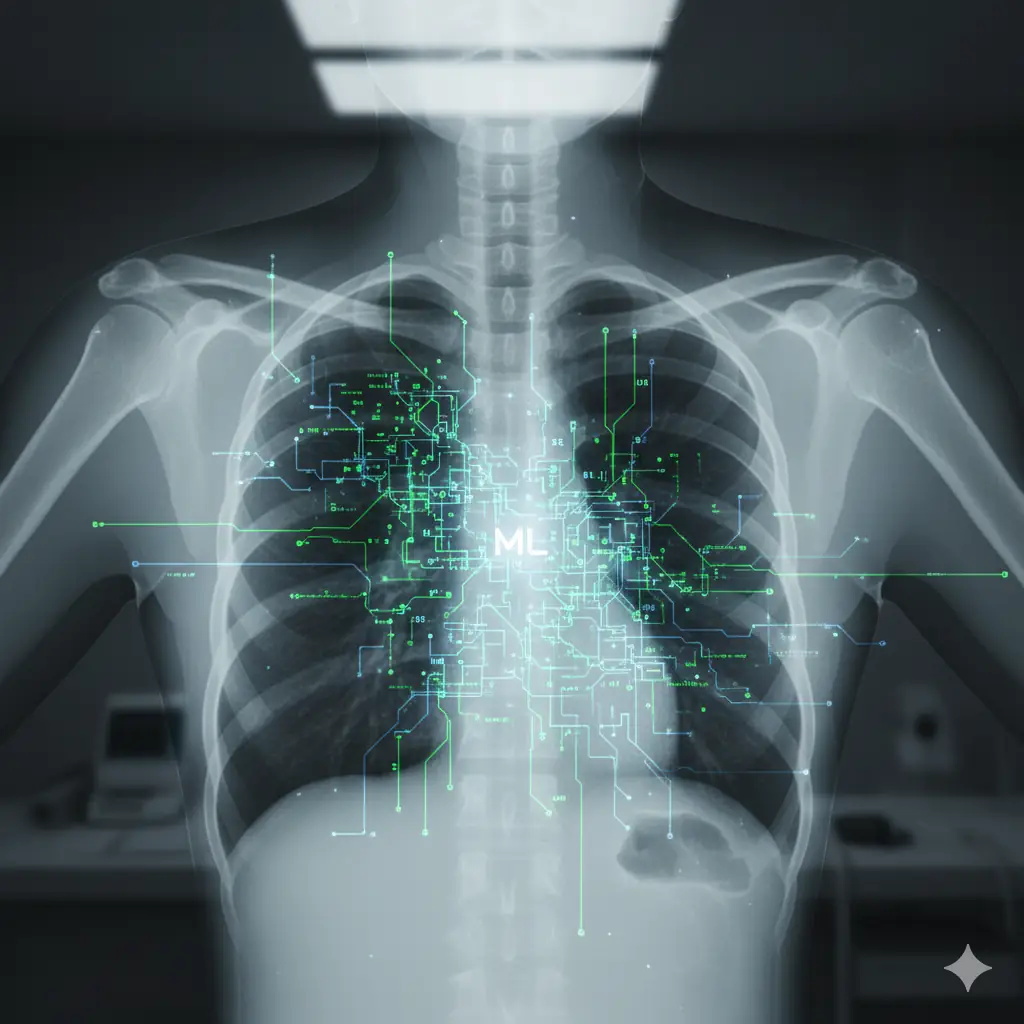


The Early Warning System: Machine Learning’s Role in Cancer Detection
Cancer remains one of the most challenging diseases, but early detection dramatically improves survival rates. In this critical race against time, Machine Learning (ML) is emerging as a powerful ally, offering unprecedented capabilities to spot the subtle signs of cancer far sooner than traditional methods.
Here at insurancesapp.site, we’re exploring how ML algorithms are enhancing everything from analyzing medical images to identifying genetic markers, ultimately transforming the landscape of oncology and patient care.
Enhancing Medical Imaging Analysis
One of ML’s most impactful roles is in interpreting medical images. Radiologists review countless scans—mammograms, CTs, MRIs, and pathology slides—searching for tiny anomalies that could indicate cancer. This is a highly skilled but also intensely demanding task.
Machine Learning, particularly deep learning models like Convolutional Neural Networks (CNNs), can process these images with incredible precision and consistency. They are trained on vast datasets of both healthy and cancerous images, learning to identify patterns that might be too subtle or complex for the human eye alone.
For instance, an ML model can analyze a mammogram and highlight suspicious microcalcifications or masses that a radiologist might miss, especially in dense breast tissue. This acts as a ‘second pair of eyes,’ significantly reducing false negatives and improving the chances of early diagnosis.
Revolutionizing Biomarker Discovery
Beyond imaging, ML is accelerating the discovery of biomarkers—biological indicators that can signal the presence of cancer, often detectable through blood tests or genetic sequencing. Traditional biomarker discovery is a painstaking process.
ML algorithms can analyze massive amounts of genomic, proteomic, and metabolomic data. They can identify complex patterns in these datasets that correlate with specific cancer types or even predict a patient’s risk of developing cancer years in advance.
For example, an ML model might find a unique combination of proteins in a blood sample that reliably indicates early-stage pancreatic cancer, a disease notoriously difficult to detect until advanced stages. This opens doors for non-invasive, early screening tests.
Predictive Modeling for Risk Assessment
Machine Learning is also being used to build predictive models that assess an individual’s cancer risk. These models integrate various factors, including genetic predispositions, lifestyle choices, environmental exposures, and family history.
By crunching these diverse data points, an ML algorithm can provide a personalized risk score. This allows healthcare providers to identify high-risk individuals and recommend more frequent screenings, preventative measures, or lifestyle modifications.
Imagine a model predicting a higher-than-average risk for colon cancer in a patient based on genetic markers and dietary habits. This could prompt earlier colonoscopies, catching precancerous polyps before they turn malignant.
| Application Area | ML Technique Used | Impact on Detection |
|---|---|---|
| Medical Imaging | Convolutional Neural Networks (CNNs) | Identifies subtle lesions, reduces false negatives in mammograms/CTs. |
| Biomarker Discovery | Clustering, Classification Algorithms | Discovers novel genetic/protein markers for non-invasive early tests. |
| Risk Assessment | Regression, Classification | Predicts individual cancer risk based on genetics, lifestyle, history. |
| Pathology Analysis | Deep Learning (Image Analysis) | Automates tumor grading, improves accuracy in diagnosing tissue samples. |
Streamlining Pathology and Histology
Pathologists examine tissue biopsies under microscopes to confirm cancer diagnoses and determine their stage and grade. This is another area where ML is making significant inroads, especially with the digitization of pathology slides.
ML algorithms can analyze entire digital slides, identifying cancerous cells, measuring tumor size, and even grading the aggressiveness of the cancer with remarkable speed and consistency. They can also detect tiny metastatic cells in lymph nodes that might be missed by the human eye during a long, tedious review.
This automation speeds up diagnosis, reduces inter-observer variability (different pathologists reaching different conclusions), and frees up pathologists to focus on the most complex and ambiguous cases.
Challenges and Ethical Considerations
While the potential is immense, deploying ML in cancer detection isn’t without challenges. Data quality is paramount; biased or incomplete training data can lead to skewed results, exacerbating health disparities.
Another hurdle is the ‘black box’ nature of some ML models, making it difficult to understand *why* a particular prediction was made. In medicine, clinicians need transparency to trust and act on AI’s recommendations.
Design Highlight: Iterative Learning
ML models for cancer detection aren’t static. They continuously learn and improve as they are fed new, validated data and as new scientific discoveries emerge. This iterative process means the ‘early warning system’ gets smarter over time.
Ensuring patient privacy and establishing clear accountability for AI-driven diagnoses are also critical ethical considerations that healthcare systems and regulators are actively addressing.
Tips for Harnessing ML in Cancer Detection
- Prioritize Data Diversity: Ensure ML models are trained on diverse datasets representing various demographics to prevent bias.
- Validate Extensively: Rigorously test ML tools in real-world clinical settings, not just in labs, to confirm their accuracy and reliability.
- Maintain Human Oversight: Always use ML as a supportive tool for clinicians; the final diagnostic decision must remain with a human expert.
- Seek Explainable AI (XAI): Favor ML systems that can provide clear reasoning for their predictions, fostering trust and understanding among healthcare providers.
The integration of Machine Learning into early cancer detection is a transformative step, offering a future where diagnoses are faster, more accurate, and more personalized. By leveraging the power of data analysis, ML is helping us catch cancer at its most treatable stages, ultimately saving countless lives.
As these technologies evolve, we can look forward to even more sophisticated early warning systems. Stay updated with insurancesapp.site for the latest advancements in AI and medical research.